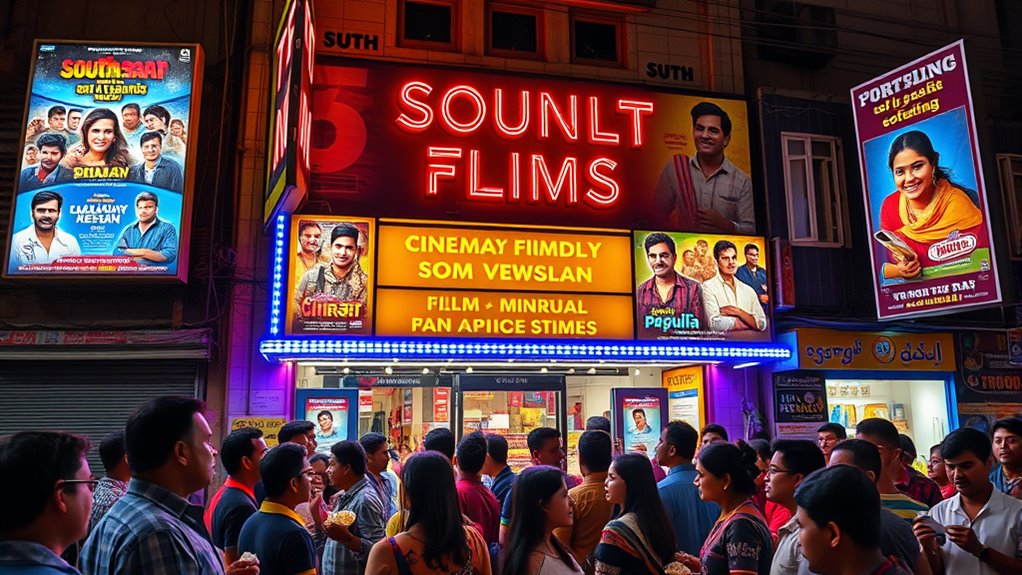

South Indian films like “Baahubali,” “Kantara,” and “Pushpa” have become huge hits across India, capturing Hindi audiences’ attention. They break language barriers by offering dubbed versions and Hindi releases, showcasing regional stories with universal appeal. These films blend local culture, traditional themes, and stunning visuals, making them relatable everywhere. If you want to explore how regional cinema is reshaping Indian entertainment, you’ll find plenty more exciting examples ahead.
Key Takeaways
- Regional films like “Baahubali,” “Kantara,” and “Pushpa” achieved massive success across India, appealing to Hindi audiences.
- Widespread dubbed and Hindi versions of regional movies increased accessibility and viewership nationwide.
- South Indian cinema’s authentic regional elements and storytelling styles resonate beyond their traditional markets.
- The pan-India success of regional blockbusters has diversified Indian cinema, influencing mainstream Bollywood content.
- These films showcase local cultures and traditions, fostering cultural appreciation and inclusivity across India.

In recent years, regional films have increasingly captured the attention of Hindi-speaking audiences, breaking language barriers and showcasing diverse stories from across India. This shift isn’t just about entertainment; it reflects a broader cultural impact that resonates deeply with viewers nationwide. South Indian cinema, particularly from Tamil, Telugu, Kannada, and Malayalam industries, has gained popularity beyond its traditional borders. As a viewer, you might notice how these films bring unique regional flavors into the mainstream, highlighting local traditions, dialects, and storytelling styles. This diversity enriches the Indian film landscape and broadens your cinematic palate.
Regional films are now captivating Hindi audiences by showcasing diverse local stories and cultural flavors.
The success of these films at the box office is a demonstration to their widespread appeal. Films like “Baahubali,” “Kantara,” and “Pushpa” have shattered expectations, turning regional blockbusters into pan-India phenomena. When a regional film earns massive revenue and attracts audiences across different states, it signals a significant shift in the industry’s dynamics. You can see this reflected in the increasing number of dubbed versions and Hindi releases of regional hits, making it easier for you to enjoy these stories without language barriers. This box office success isn’t just about numbers; it signifies recognition of regional talent and storytelling prowess on a national scale.
What makes these films particularly appealing is their ability to blend authentic regional elements with universally relatable themes. You’re drawn to stories that depict local cultures, rural settings, or traditional conflicts, yet they carry emotional depth that resonates with audiences everywhere. The striking visuals, regional music, and dialects add layers of authenticity, making you feel connected to the story on a personal level. The box office triumphs of such films also encourage filmmakers to invest in regional stories, knowing they can reach a broader audience. This creates a cycle where regional cinema continues to grow, influence mainstream Bollywood, and diversify the Indian cinematic landscape.
As a viewer, you benefit from this evolution because it offers you a richer variety of stories. The rise of South cinema’s pan-India appeal means you’re no longer confined to Hindi films alone; instead, you have access to a treasure trove of regional gems that entertain, inspire, and challenge conventions. This cultural impact enriches your film-watching experience, making it more inclusive and representative of India’s vast diversity. The box office success of these films proves that regional stories are not just niche interests but crucial parts of India’s cinematic identity, now celebrated across the country and beyond. Recognizing regional storytelling as a vital aspect of Indian cinema encourages further support and appreciation for diverse narratives.

MoviesWaale- South Indian Hindi Dubbed Movies
- Watch South Indian Hindi Dubbed Movies: Stream popular dubbed movies
- Download Movies: Save movies for offline viewing
- Share with Friends: Share movies easily with friends
As an affiliate, we earn on qualifying purchases.
As an affiliate, we earn on qualifying purchases.
Frequently Asked Questions
How Have Regional Films Impacted Bollywood’s Storytelling Trends?
Regional films have considerably influenced Bollywood’s storytelling trends by introducing fresh cultural narratives and storytelling innovations. You’ll notice more diverse themes, authentic regional accents, and localized stories now integrated into mainstream cinema. This shift encourages you to see beyond traditional Bollywood tropes, embracing a richer variety of perspectives. As a result, Bollywood evolves, becoming more inclusive and reflective of India’s vibrant regional cultures, making its stories more relatable and impactful for wider audiences.
What Challenges Do Regional Films Face in Reaching Hindi Audiences?
You face challenges like linguistic barriers that make it harder for regional films to connect with Hindi audiences, limiting their reach. Additionally, marketing limitations hinder visibility and awareness outside your local language markets. To overcome these obstacles, you need targeted promotion strategies, subtitles, and collaborations across languages. These efforts can help regional films break into the Hindi market, expanding their audience and boosting their success nationwide.
Which Regional Film Broke Hindi Box Office Records Recently?
You’ll be interested to know that the Tamil film “Vikram” recently broke Hindi box office records. Its success was driven by effective dubbing strategies and widespread screening at regional film festivals, which helped it connect with Hindi audiences. The film’s compelling story and star power attracted viewers from diverse backgrounds, proving that regional films can achieve pan-India appeal through smart marketing and localization efforts.
How Do Regional Films Influence Mainstream Indian Cinema?
Regional films act as seeds of cultural integration, spreading diverse stories across India’s mainstream cinema. You see, they diversify audiences by showcasing unique traditions and narratives, much like colorful threads woven into a larger tapestry. This influence encourages mainstream filmmakers to embrace regional talent, stories, and styles, enriching Indian cinema’s palette. By doing so, regional films reshape narratives, foster unity in diversity, and ultimately, elevate the entire industry’s creative landscape.
What Role Does Language Dubbing Play in Regional Film Success?
Language dubbing plays a vital role in regional film success by making content accessible to wider audiences. You benefit from advanced dubbing technology advancements and voice-over techniques that guarantee natural, engaging performances across languages. These innovations help preserve the film’s essence, making regional stories resonate with Hindi audiences. Effective dubbing bridges cultural gaps, broadens reach, and boosts the film’s popularity, ultimately transforming regional movies into pan-India hits.
Best regional films from India on Blu-ray
As an affiliate, we earn on qualifying purchases.
As an affiliate, we earn on qualifying purchases.
Conclusion
As you’ve seen, regional films are breaking barriers and capturing hearts across India. But what’s next? Will these films continue to dominate the Hindi mainstream, or is there an even bigger shift on the horizon? The industry’s future is full of surprises, and one thing’s certain—you won’t want to miss what’s coming next. Stay tuned, because the story of South cinema’s rise is far from over, and the best is yet to be revealed.

As an affiliate, we earn on qualifying purchases.

Bollywood Sheet Musis-Give Me Some Shine Film 3 IDIOTS
As an affiliate, we earn on qualifying purchases.
As an affiliate, we earn on qualifying purchases.