TL;DR

Get movie nights delivered free with Prime
- Fast, free delivery on millions of items
- Prime Video, Amazon Music and more included
- Member-only deals all year
“Battle of the Motors,” starring Yura Borisov and Ivan Yankovsky, opened in Russian theaters on October 8 and dramatizes the 1912 Monte Carlo Rally run by a Russian team in a Russo-Balt. The real drivers were Andrey Nagel and Avtomobil employee Vadim Mikhailov, not the film’s mechanic character Dmitry Bondarev; the team drove from St. Petersburg to Monaco in winter without a windshield. The production draws on real events but takes artistic liberties.
Ilya Malanin’s “Battle of the Motors” opened in Russian theaters on October 8, dramatizing the journey of a Russo-Balt car and its crew from St. Petersburg to the 1912 Monte Carlo Rally. The historical team was led by driver Andrey Nagel and teammate Vadim Mikhailov; the film replaces Mikhailov with mechanic Dmitry Bondarev and, its creators acknowledge, takes artistic liberties with the events.
The real journey covered about 3,200 kilometers (1,990 miles), the longest route entered in the rally that year, according to Meduza’s account by history educator Andrey Aksenov. Nagel and Mikhailov traveled in winter in an open Russo-Balt without a windshield and without detailed road maps. Their entry marked the first appearance of a Russian team in the event, a significant achievement for a young domestic auto industry.
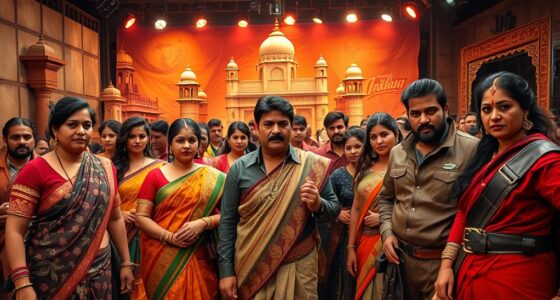
The movie stars Yura Borisov and Ivan Yankovsky and focuses substantially on the effort to build the car. Its story follows Nagel, who publishes the magazine Avtomobil, as he seeks support for a Russian-made vehicle from Mikhail Shidlovsky, chairman of the Russian-Baltic Wagon Works. The film casts Bondarev as Nagel’s close collaborator, but the historical teammate was Avtomobil employee Mikhailov.
The Russo-Balt was among the most technologically advanced and fastest cars built in the Russian Empire, but production was limited. A standard Model C cost about 8,000 rubles, while an average worker earned roughly 20 rubles a month. The Riga factory, whose main business was railroad cars, had been assembling Russo-Balts since 1909; only about 350 Model C cars were produced.
A Rally as an Industry Test
The 1912 entry mattered beyond the result of one race. It put a Russian-built car on an international stage at a time when the country’s automobile manufacturing was small and concentrated in a single make, the Russo-Balt. Nagel and Mikhailov’s long winter route tested both the vehicle and the crew under difficult conditions, and became a landmark for Russian motorsport and domestic car production.
The film also brings that history to a wide audience while blending it with invented drama. Distinguishing the documented rally from the screenplay matters because the real story is notable on its own: an open car, a long route from St. Petersburg, and a team attempting an international endurance event with limited maps and support.
As an affiliate, we earn on qualifying purchases.
Cars in Imperial Russia
Cars were visible in Russian cities by the early 20th century, but remained expensive status goods and technological novelties rather than everyday transport for most residents. In Moscow and St. Petersburg, streetcars were the main public transport; horse-drawn cabs followed, with cars less common. Roads could be hazardous: horseshoe nails punctured tires, and some cities used vehicles fitted with electromagnets to collect them.
When Nagel and Mikhailov set out for Monaco, the Russo-Balt was the only car make manufactured in Russia, according to the source report. A second manufacturer, Ivan Puzyrev, began building cars in St. Petersburg in 1912, aiming to use Russian components. Before World War I, his company produced about 40 vehicles. The rally therefore took place during an early, fragile phase of the country’s auto industry.
The movie’s account is not a documentary reconstruction. Meduza reports that reviewers identified conspicuous historical changes, including the substitution of Bondarev for Mikhailov. The production reportedly built several authentic cars for filming using original blueprints, while its narrative gives prominent roles to conflicts around the car’s development and to foreign rivals.
“The film draws heavily on real events, though its creators emphasize that it takes plenty of artistic liberties.”
— Meduza, summarizing the film’s creators’ position
Russian Empire Russo-Balt car model
As an affiliate, we earn on qualifying purchases.
As an affiliate, we earn on qualifying purchases.
Where Film and Record Diverge
The source account identifies the historical drivers and the route, but the supplied material does not provide a full comparison of the movie’s scenes with contemporary records. It is therefore unclear how extensively the film changes other details beyond the substitution of Bondarev for Mikhailov and its dramatic treatment of rivals and imperial officials. The source also describes the trip as taking place in 1912 while referring to Nagel and Mikhailov setting off in 1911; the exact departure date is not established in the material provided.
The report does not give the team’s full finishing result or a detailed account of the rally’s rules. It also does not specify how the film performed at the box office after opening. Those details should not be inferred from the movie’s release or from the historical importance of the entry.
As an affiliate, we earn on qualifying purchases.
The Film’s Reception and History
“Battle of the Motors” is now showing in Russian theaters. The available source material does not identify a later release date, distribution plan outside Russia or further production announcements. For viewers seeking the documented history, the central distinction is clear: Nagel’s actual teammate was Vadim Mikhailov, while Bondarev is part of the film’s dramatized story.
Further reporting or historical documentation would be needed to establish how the movie handles other disputed details and to assess its audience reception. Until then, the confirmed account is the 1912 Russian entry’s winter journey in a Russo-Balt, set against the limited scale and high cost of car manufacturing in the empire.
As an affiliate, we earn on qualifying purchases.
Key Questions
When did “Battle of the Motors” open?
The film opened in Russian theaters on October 8, 2026, according to the source report.
Who drove the real Russo-Balt in the 1912 rally?
The historical team consisted of driver Andrey Nagel and Vadim Mikhailov, an employee of the magazine Avtomobil. The film instead gives Nagel a mechanic teammate named Dmitry Bondarev.
How far did the team travel?
The route from St. Petersburg to Monaco covered about 3,200 kilometers, or 1,990 miles, according to Meduza’s report.
Was the movie based entirely on verified events?
No. It draws on the historical rally but includes artistic liberties. The changed teammate is one documented example; the supplied reporting does not list every alteration.
Why was the rally important for Russia?
It was the first appearance of a Russian team in the Monte Carlo Rally and showcased the Russo-Balt at a time when automobile production in Russia was limited.
Source: rss
Fall Picks
fall essentials
As an affiliate, we earn on qualifying purchases.