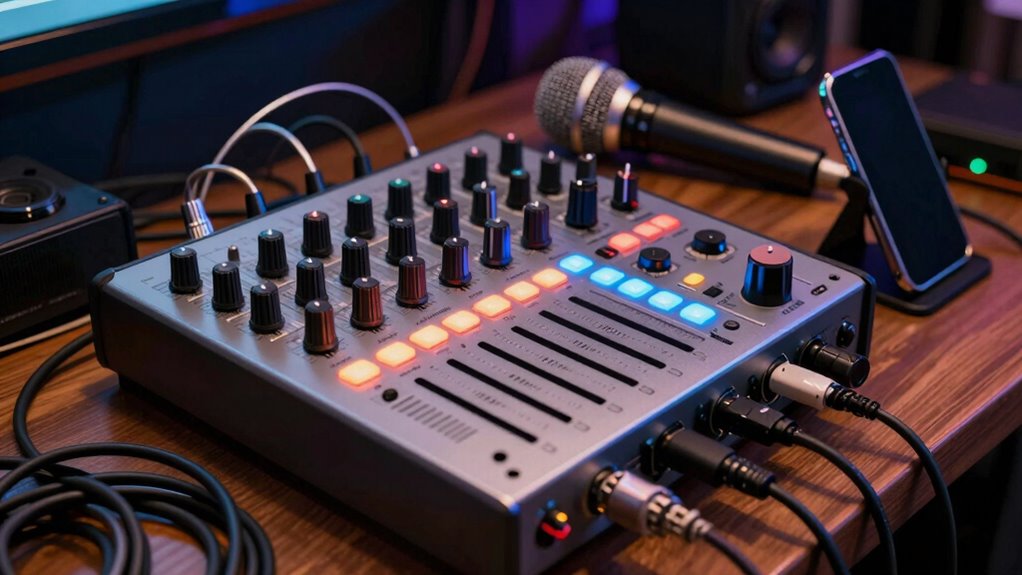

Before buying an audio mixer for karaoke, you’ll want to take into account key trade-offs: wireless connectivity offers convenience but may introduce interference, while sound effects and processing add versatility but can reduce clarity and cause lag. Build quality impacts durability and sound performance, and a higher channel count provides more flexibility but costs more. Balancing these factors ensures your setup meets your needs without surprises—if you keep exploring, you’ll discover how to make the best choice.
Key Takeaways
- Wireless mixers offer convenience but may suffer from interference and latency, affecting sound quality during performances.
- Extensive sound effects can complicate operation and reduce audio clarity, especially for beginners.
- Higher build quality improves sound fidelity and durability, reducing long-term replacement costs.
- More channels provide greater flexibility for larger setups but increase size and expense.
- Balance initial cost with durability; cheaper mixers might lack robustness, leading to reliability issues.
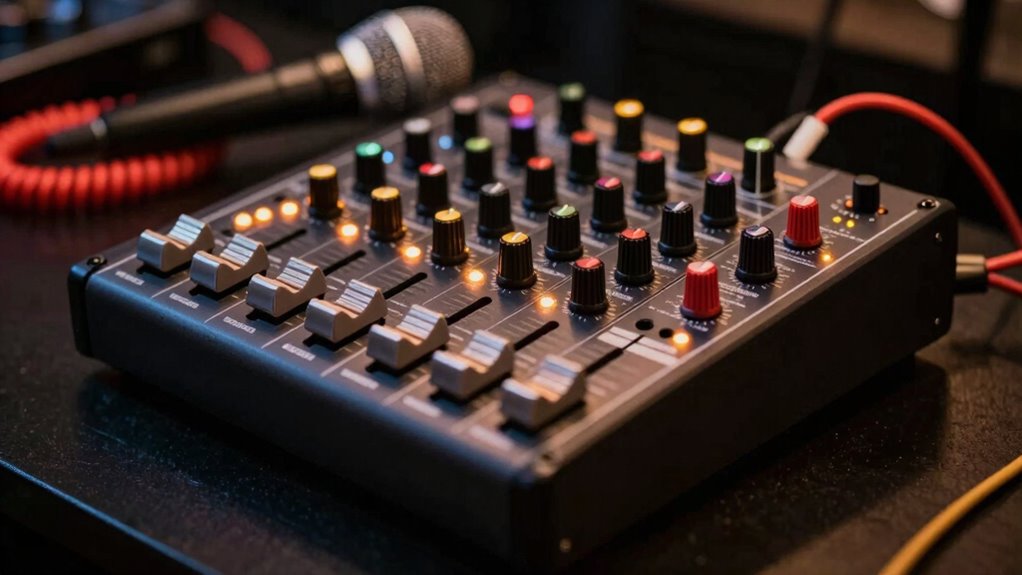
If you’re setting up a karaoke system, choosing the right audio mixer can make all the difference in delivering clear, balanced sound. But before you rush to buy the first mixer that catches your eye, it’s essential to understand the trade-offs involved. One of the key features to evaluate is wireless connectivity. While it offers the convenience of moving around freely without tangled cords, it can sometimes introduce latency or interference that affects sound quality. Wireless connections are great if you want a clutter-free setup, but they may not always provide the stability you need, especially in environments with lots of Wi-Fi traffic. You’ll need to weigh whether the ease of wireless outweighs potential interruptions or quality degradation during performances.
Sound effects are another important factor. Some mixers come packed with a variety of built-in effects like echo, reverb, and pitch adjustments, which can enhance your karaoke experience. However, the more sound effects a mixer offers, the more complex it can become to operate, especially if you’re a beginner. Plus, these effects often come at the expense of raw audio clarity. If you rely heavily on sound effects, you might prefer a mixer that offers extensive options, but if you prioritize pristine sound quality, you might want to limit effects or use external processors instead. Remember, the more effects you add, the more processing power the mixer consumes, which could lead to lag or lower audio fidelity. Additionally, sound quality can vary significantly depending on the build and components used in the mixer. It’s worth considering build quality as well, since a more durable unit can provide consistent performance over time. Furthermore, choosing a mixer with noise reduction features can help prevent audio issues caused by environmental noise or interference, ensuring cleaner sound during performances.
Furthermore, understanding channel count is vital, as it determines how many microphones and instruments you can connect simultaneously, impacting your overall setup flexibility. Another trade-off revolves around the number of channels. A mixer with numerous channels allows you to connect multiple microphones and instruments, which is perfect if you’re planning larger gatherings or duet performances. But more channels typically mean a larger, more expensive unit that can be overwhelming to operate. Conversely, a simpler, smaller mixer might be easier to use and more affordable but could restrict your setup’s flexibility. The durability of the mixer is also an important consideration, especially if you plan to use it regularly or transport it frequently. Cheaper mixers might seem tempting, but they often lack robust construction, which can lead to reliability issues over time. Investing in a well-built mixer might cost more upfront but can save you headaches and replacements later on. Balancing these trade-offs—wireless convenience, sound effects, channels, and durability—will help you select an audio mixer that truly enhances your karaoke experience without surprises down the line.
As an affiliate, we earn on qualifying purchases.
Frequently Asked Questions
Can I Use a Home Stereo Amplifier Instead of a Dedicated Audio Mixer?
You can use a home stereo amplifier instead of a dedicated audio mixer, but it might limit your control over sound quality and speaker placement. Stereo amps usually lack multiple channels, making it harder to balance different microphones and instruments. As a result, your sound quality may suffer, and adjusting speaker placement for ideal acoustics becomes more challenging. For a smoother karaoke experience, a dedicated mixer offers better flexibility and sound management.
How Do I Connect Wireless Microphones to the Mixer?
Did you know over 80% of wireless microphone users struggle with connection issues? To connect wireless microphones to your mixer, first check the wireless frequency to verify compatibility with your mixer’s channels. Use the receiver’s output to connect to the mixer’s input, typically via XLR or 1/4-inch jack. Make sure your microphones operate on the same frequency range as your mixer to avoid interference and guarantee clear sound.
What Is the Ideal Number of Channels for a Small Karaoke Setup?
For a small karaoke setup, 4 to 6 channels usually work best, giving you enough microphones and instrument inputs without complexity. You’ll want to focus on proper microphone placement to avoid feedback and guarantee clear sound. Speaker calibration is vital too—adjust your mixer to balance levels, so everyone can be heard clearly. Keep it simple, and you’ll enjoy smooth performances with minimal hassle.
Are Digital Mixers Easier to Operate Than Analog Mixers?
Imagine you’re new to karaoke and want quick results. Digital mixers are generally easier to operate than analog ones because of their digital interfaces, which simplify controls and settings. Many users find digital mixers more user-friendly, especially with features like touchscreens and preset functions. So, if you’re prioritizing ease of use, a digital mixer can help you get started faster and manage your setup more efficiently.
How Often Should I Upgrade My Karaoke Audio Equipment?
You should upgrade your karaoke audio equipment when you notice issues like poor speaker placement affecting sound quality or declining battery life in wireless components. Regularly assess how well your current setup meets your needs, especially if sound clarity or volume consistency drops. Upgrading every few years keeps your system current, improves performance, and guarantees you enjoy seamless karaoke sessions without interruptions caused by outdated equipment.
As an affiliate, we earn on qualifying purchases.
Conclusion
Before you buy an audio mixer for your karaoke setup, weigh your options carefully, consider your needs clearly, and understand the trade-offs thoroughly. Don’t rush into a purchase driven by price alone, don’t overlook the features you might need later, and don’t ignore the space constraints you face. By making an informed decision, you’ll guarantee your karaoke nights are smooth, your sound is clear, and your enjoyment is limitless. Choose wisely, sing loudly, and have fun!
durable multi-channel audio mixer
As an affiliate, we earn on qualifying purchases.
As an affiliate, we earn on qualifying purchases.
professional karaoke sound mixer
As an affiliate, we earn on qualifying purchases.
As an affiliate, we earn on qualifying purchases.