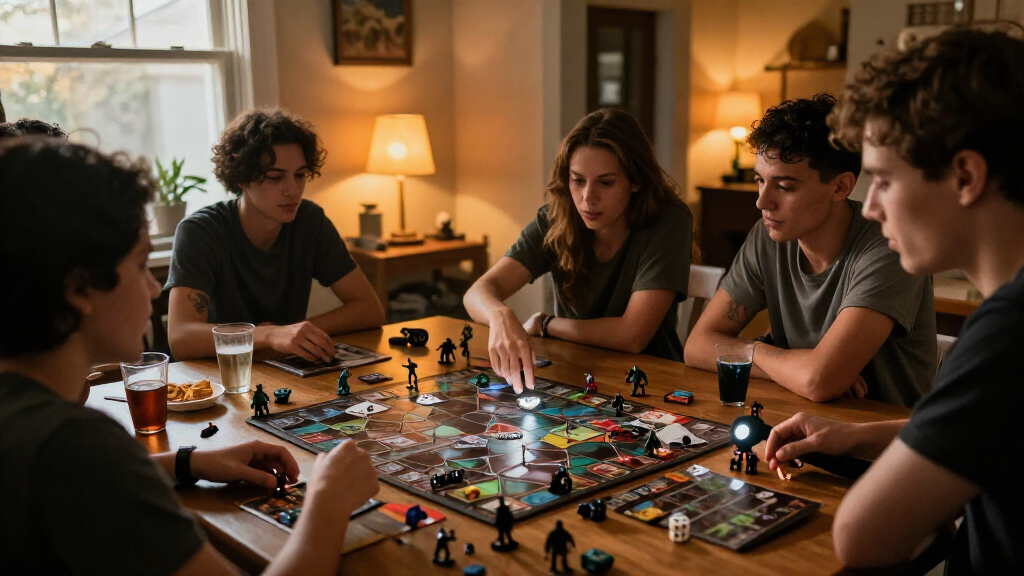
Horror movie board games range from quick party quizzes to tense, franchise-based strategy games, so the right pick depends on how your group likes to play. I’d start with Spooktacular for its broad monster roster and solo-to-group range, while Trivial Pursuit Horror Ultimate Edition stands out for fans who want a large question pool and CLUE: Universal Monsters suits players who prefer deduction over film recall. The main tradeoff is between accessible party play and deeper, more specific game themes; trivia-heavy choices can also favor players who already know horror films. I compare all 14 options by audience, format, and practical fit so you can see which kind of horror night each one supports. Continue reading for the full breakdown.

Get movie nights delivered free with Prime
- Fast, free delivery on millions of items
- Prime Video, Amazon Music and more included
- Member-only deals all year
Key Takeaways
- Spooktacular has the widest stated player range among the strategy-focused options, supporting solo play as well as groups of up to five.
- Trivial Pursuit Horror Ultimate Edition offers the largest stated question pool at 1,800 questions, while the standard Horror Movie Edition lists 600.
- Party games and trivia games serve different kinds of gatherings: Taboo, Poorly Explained Movies, and POP Scream lean toward quick social play, while Trivial Pursuit rewards film knowledge.
- Franchise-specific games narrow the theme but strengthen its identity: Chucky, Halloween, Five Nights at Freddy’s, Texas Chainsaw Massacre, and House of 1000 Corpses each center on a particular property.
- The lineup is not all board-focused in the same way: trivia cards and party formats offer a lighter setup, while deduction and strategy picks are better for groups seeking more structured play.
| Taboo: Horror Edition Party Board Game |  | Best for Horror-Themed Parties | Players: 2 or more | Recommended age: 13 and up | Guess words: 900 | VIEW LATEST PRICE | See Our Full Breakdown |
| Endless Games Chucky Classic Horror Cooperative Game |  | Best Cooperative Horror Pick | Players: 1–5 | Recommended age: 13 and up | Game type: Cooperative | VIEW LATEST PRICE | See Our Full Breakdown |
| Halloween 1978 The Board Game |  | Best for Asymmetric Suspense | Players: 2–4 | Game mechanics: Asymmetric, cooperative, hidden movement | Theme: Halloween (1978) | VIEW LATEST PRICE | See Our Full Breakdown |
| Trivial Pursuit Horror Movie Edition |  | Best for Broad Horror Film Trivia | Players: 2 or more | Recommended age: 17 and up | Playing time: About 60 minutes | VIEW LATEST PRICE | See Our Full Breakdown |
| Horror Trivia Card Game |  | Best Quick-Play Horror Quiz | Players: 2 or more | Recommended age: 13 and up | Playing time: About 20 minutes | VIEW LATEST PRICE | See Our Full Breakdown |
| Spooktacular Board Game – Play as 20 Spooky Cinema Monsters, Horror Strategy Game for 1-5 Players |  | Best for Monster Variety | Players: 1–5 | Playtime: 45–60 minutes | Monster characters: 20 | VIEW LATEST PRICE | See Our Full Breakdown |
| Just Play Five Nights at Freddy’s Night of Frights Board Game |  | Best for Five Nights at Freddy’s Fans | Players: 2–4 | Recommended age: 8+ | Playable characters: Freddy, Chica, Bonnie, and Foxy | VIEW LATEST PRICE | See Our Full Breakdown |
| Trivial Pursuit Horror Ultimate Edition | Trivia Game Featuring 1800 Questions from Classic Films & Books |  | Best for Deep Horror Trivia | Players: 2 or more | Recommended age: 17+ | Question count: 1,800 | VIEW LATEST PRICE | See Our Full Breakdown |
| CLUE: Universal Monsters Board Game, Explore, Deduce & Solve the Mystery |  | Best for Classic Monster Deduction | Players: 2–6 | Game mechanic: Deduction | Case: Investigate Van Helsing’s disappearance | VIEW LATEST PRICE | See Our Full Breakdown |
| Brass Monkey – Poorly Explained Movies Horror Edition Party Trivia Game |  | Best for Quick Party Laughs | Players: 2 or more | Cards: 125 movie cards | Play styles: Competitive and casual | VIEW LATEST PRICE | See Our Full Breakdown |
| Don’t Get Stabbed!: The Party Game Where You Get to Kill Your Family and Friends (for Pretend) |  | Best for Asymmetric Party Play | Players: 3–5 | Suggested age: 18+ | Components: 64 Main Deck Cards, 13 Car Deck Cards, instruction booklet | VIEW LATEST PRICE | See Our Full Breakdown |
| The Texas Chainsaw Massacre Board Game | 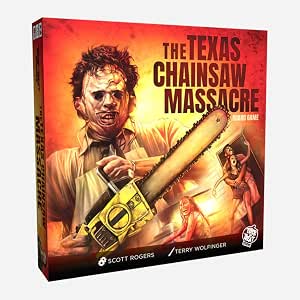 | Best Cooperative Push-Your-Luck Escape | Player count listed: 1 | Game type: Cooperative horror board game | Core mechanism: Draw tokens from a bag to take actions, with added draws risking antagonism | VIEW LATEST PRICE | See Our Full Breakdown |
| POP Scream Party Game |  | Best for Larger Scream Fan Groups | Players: 3–8 | Suggested age: 13+ | Play time: 20 minutes | VIEW LATEST PRICE | See Our Full Breakdown |
| Trick Or Treat Studios Rob Zombie’s House of 1000 Corpses Board Game |  | Best for Solo and Small-Group Movie Fans | Players: 1–4 | Play time: 60 minutes | Suggested age: 14+ | VIEW LATEST PRICE | See Our Full Breakdown |
| horror movie board game | Players | Item weight |
|---|---|---|
| Taboo: Horror Edition Party Bo | 2 or more | — |
| Endless Games Chucky Classic H | 1–5 | — |
| Halloween 1978 The Board Game | 2–4 | 1100 g |
| Trivial Pursuit Horror Movie E | 2 or more | — |
| Horror Trivia Card Game | 2 or more | — |
| Spooktacular Board Game | 1–5 | 2.1 pounds |
| Just Play Five Nights at Fredd | 2–4 | — |
| Trivial Pursuit Horror Ultimat | 2 or more | — |
| CLUE: Universal Monsters Board | 2–6 | — |
| Brass Monkey | 2 or more | 220 g |
| Don’t Get Stabbed!: The Party | 3–5 | 7.52 ounces |
| The Texas Chainsaw Massacre Bo | — | 4 pounds |
| POP Scream Party Game | 3–8 | 0.41 kg |
| Trick Or Treat Studios Rob Zom | 1–4 | 3.6 pounds |
More Details on Our Top Picks
Taboo: Horror Edition Party Board Game
Taboo: Horror is the liveliest choice here for a group that wants horror references without a long rules explanation. Players describe one of 900 horror-inspired words while avoiding forbidden clues, so recognition and quick phrasing matter more than deep film knowledge. The screaming buzzer adds a noisy party-game hook, unlike Halloween 1978 The Board Game, which builds tension through asymmetric pursuit and hidden movement. That makes Taboo easier to bring out with a mixed group, but it offers less movie-specific atmosphere and no substantial board-game strategy. It suits Halloween gatherings and fans of horror culture across films, places, and objects; players looking for a tense survival scenario should choose a different kind of game. The listing gives no fixed playtime or upper player limit, so group logistics are less defined than in the trivia options.
Pros:- 900 guess words provide a substantial pool of horror-themed prompts.
- The forbidden-word clue format makes play active and conversational.
- Screaming buzzer gives mistakes an immediate, playful consequence.
- Ages 13 and up makes it accessible to many teen-and-adult groups.
Cons:- Relies on describing and guessing words rather than board movement or horror-story decisions.
- The listing does not specify playtime or a maximum player count.
- Players unfamiliar with horror vocabulary may struggle to give effective clues.
Best for: Horror fans hosting a lively party who want a quick word-and-clue challenge that can accommodate at least two players.
Not ideal for: Players seeking a cinematic, strategic horror scenario, or groups that need a clearly stated maximum player count and playtime.
- Players:2 or more
- Recommended age:13 and up
- Guess words:900
- Game format:Forbidden-word clue and guessing game
- Theme:Horror movies, locations, and objects
- Included feature:Screaming buzzer
Our verdict“Choose Taboo: Horror for a flexible, noisy party challenge, not for a strategic movie-based survival game.”
Endless Games Chucky Classic Horror Cooperative Game
Chucky gives this lineup a direct team-versus-threat setup: players work together to find weapons and attack the killer doll, while deciding whether to hide or risk provoking him. That push-your-luck tension makes it a more narrative, shared experience than Horror Trivia Card Game, which centers on answering pop-culture questions. The standout is the Chucky game unit, described as attacking without warning; sudden danger gives the table a physical focus that a card-only quiz cannot match. It also supports solo play, a useful distinction from most party-focused choices here. The tradeoff is that its appeal leans heavily on the Chucky character and its cooperative premise, so it may feel narrow to fans wanting broad horror-film coverage. Repeated injuries can end the game abruptly, making risk management central rather than optional.
Pros:- Cooperative play gives players a shared objective against Chucky.
- Supports one to five players, including solo play.
- The Chucky unit can attack without warning, adding a tangible threat.
- Hide-or-provoke decisions create a clear risk-versus-safety choice.
Cons:- The Chucky-centered theme is narrower than the multi-film scope of Trivial Pursuit Horror Movie Edition.
- Two injuries to a player trigger an immediate loss, which can cut a session short.
- The supplied details do not state a playtime.
Best for: Chucky fans and small groups who want a cooperative horror challenge, including a solo option.
Not ideal for: Horror fans who want broad movie trivia, competitive teams, or a game that avoids sudden player-elimination-style endings.
- Players:1–5
- Recommended age:13 and up
- Game type:Cooperative
- Theme:Chucky horror franchise
- Included feature:Chucky game unit
- Play area:Indoor
- Item dimensions:5 x 2.5 x 9 inches
- Materials:Cardboard
Our verdict“Pick Chucky if you want a cooperative, character-led horror game and are comfortable with abrupt consequences for risky play.”
Halloween 1978 The Board Game
Halloween 1978 The Board Game is the strongest fit in this batch for players who want to recreate a horror movie’s hunt-and-escape tension rather than answer questions about it. One player controls Michael Myers, while the others guide Laurie and her friends as they search for weapons, locate children, and try to escape. Its asymmetric, hidden-movement setup makes each side play differently, a sharper dramatic contrast than the shared wordplay of Taboo: Horror. The distinctive rule that Myers can only be seen when players look toward him ties the mechanics to the film’s threat. That focus also narrows its audience: it is built around one movie and needs at least two players, with no solo mode listed. Buyers should choose it for thematic tension, not for a broad survey of horror cinema or a casual trivia round.
Pros:- One-versus-many structure gives the pursuer and survivors distinct roles.
- Hidden movement supports suspense and uncertainty.
- The visibility rule connects the gameplay to the film’s point of view.
- Survivors have concrete goals involving weapons, children, and escape.
Cons:- The dedicated Halloween theme is less varied than multi-genre trivia games.
- Requires at least two players; no solo option is listed.
- One-versus-many play may not suit groups that prefer fully cooperative games.
Best for: Fans of the original Halloween film who want one-versus-many hidden-movement play and a dedicated role for Michael Myers.
Not ideal for: Solo players, groups wanting broad horror-franchise coverage, or casual gatherings that prefer fast trivia and word games.
- Players:2–4
- Game mechanics:Asymmetric, cooperative, hidden movement
- Theme:Halloween (1978)
- Subject character:Michael Myers
- Play area:Indoor
- Rulebook:Printed, included
- Materials:Cardboard, paper, and plastic
- Item weight:1100 g
Our verdict“Choose Halloween 1978 for film-specific pursuit and survival play, especially if your group enjoys asymmetric roles.”
Trivial Pursuit Horror Movie Edition
Trivial Pursuit Horror Movie Edition is the broadest film-focused quiz in this group: its 600 questions span monster, gore, psychological, paranormal, slasher, and international horror. That range gives film buffs more subgenres to draw on than Horror Trivia Card Game, which covers horror across movies, books, and television but is designed for a shorter session. The roughly 60-minute playtime makes this a more substantial quiz night, while the 17+ age guidance sets a higher bar for the group than the 13+ trivia option. Its subject depth is a strength only when players share enough genre knowledge; otherwise, the category variety can leave less dedicated fans behind. The included cards and die keep the format familiar, but this is a knowledge contest, not a suspenseful movie-world adventure.
Pros:- 600 questions cover six stated horror subgenres.
- Film-centered scope suits players who want cinema trivia specifically.
- About 60 minutes supports a full-length quiz session.
- Cards, die, and rules provide a familiar quiz-game format.
Cons:- Recommended age of 17+ excludes younger players.
- A roughly hour-long session is less convenient than the 20-minute Horror Trivia Card Game.
- Knowledge-based competition offers less narrative tension than Halloween 1978 The Board Game.
Best for: Adult horror-film fans who want a longer quiz covering several subgenres and can gather at least two players.
Not ideal for: Younger teens, groups with mixed or limited horror-film knowledge, and players seeking cooperative or story-driven gameplay.
- Players:2 or more
- Recommended age:17 and up
- Playing time:About 60 minutes
- Question count:600
- Categories:Monster, gore, psychological, paranormal, slasher, and international
- Included components:100 cards, die, rules, wedge packaging
- Materials:Cardboard
- Dimensions:6 x 5.25 x 4 inches
Our verdict“Choose this edition for an adult group seeking a substantial, multi-subgenre horror-film quiz rather than a short party game.”
Horror Trivia Card Game
Horror Trivia Card Game is the compact, short-session pick for groups who want a quiz that moves faster than Trivial Pursuit Horror Movie Edition. Its 300 questions cover horror movies alongside books and TV, and the stated 20-minute playtime suits a party slot or a quick Halloween game night. Questions range from easier prompts to tougher ones, which may help a mixed-experience group stay involved, although the game still rewards existing genre knowledge. Players answer questions to collect weapon cards, with the first person or team to gather three different weapons winning; that objective gives the quiz a little more structure than simply taking turns answering. The tradeoff is less film-specific depth than Trivial Pursuit’s 600-question movie edition. It is also a card game rather than a board-based horror scenario, so buyers should prioritize pace and portability over atmosphere.
Pros:- 20-minute playtime fits short party sessions.
- 300 questions cover horror movies, books, and television.
- Easy and challenging questions support different levels of genre knowledge.
- Weapon-card collection adds a clear win condition to question play.
Cons:- Its 300-question pool is smaller than Trivial Pursuit Horror Movie Edition’s 600 questions.
- The wider pop-culture scope is less focused on horror films alone.
- Trivia and card collection provide less cinematic tension than Halloween 1978 The Board Game.
Best for: Teens and adults who want a brief horror-pop-culture quiz for parties, with individual or team play.
Not ideal for: Film buffs seeking a long, movie-only quiz or players looking for board movement, character roles, or a horror survival story.
- Players:2 or more
- Recommended age:13 and up
- Playing time:About 20 minutes
- Question count:300
- Cards:150
- Game format:Trivia with weapon-card collection
- Winning objective:Collect three different weapon cards
- Materials:Paper
Our verdict“Pick this card game for a quick, accessible horror-pop-culture quiz, not for deep film trivia or immersive board play.”
Spooktacular Board Game – Play as 20 Spooky Cinema Monsters, Horror Strategy Game for 1-5 Players
Spooktacular takes a strategy-first approach to horror, letting players choose among 20 asymmetric monsters with distinct powers, decks, and tactics. That variety gives it a different draw from CLUE: Universal Monsters, which builds its appeal around familiar deduction and a smaller cast of classic creatures. Area control, set collection, and tech-tree elements promise more strategic texture than a straightforward movie-trivia party game, while the solo mode makes it usable when a group isn’t available.
The tradeoff is that the broad mix of mechanics and monster-specific rules may take more effort to learn than the listing’s “simple rules” suggests, especially for players who want a quick, casual horror game. Its B-movie-inspired tone also leans theatrical rather than tied to a specific film franchise. I’d pick it for replayable monster matchups, not for a direct adaptation of a favorite movie.
Pros:- Twenty monsters with distinct powers and tactics create varied matchups.
- Supports solo play as well as competitive games for up to five.
- Combines several strategy systems rather than relying only on trivia or deduction.
- Listed playtime of 45–60 minutes suits a focused game-night session.
Cons:- The range of monster-specific abilities may add learning and reference overhead.
- Its B-movie-inspired setting may feel less specific than licensed games such as Five Nights at Freddy’s Night of Frights.
- The description does not identify a dedicated cooperative mode.
Best for: Strategy-game fans who want solo play and a changing roster of horror-inspired monsters.
Not ideal for: Players seeking a licensed movie adaptation, a simple party game, or a purely cooperative experience.
- Players:1–5
- Playtime:45–60 minutes
- Monster characters:20
- Monster boards:20 asymmetric boards
- Cards:8–9 per monster board
- Gameplay elements:Area control, set collection, tech trees, and other strategy styles
- Rulebook:Printed, included
- Item weight:2.1 pounds
Our verdict“Choose Spooktacular if you want a replayable monster strategy game with solo support, rather than a direct movie tie-in or light party quiz.”
Just Play Five Nights at Freddy’s Night of Frights Board Game
Night of Frights turns the pizzeria setting into a competitive race: players control Freddy, Chica, Bonnie, or Foxy, gather snacks, build their scare progress, and try to capture the guard before time runs out. The bag-draw finale gives each attempt a push-your-luck moment, while Action and Event cards can disrupt plans. Compared with Spooktacular, which offers a wider roster and more varied strategy systems, this is a narrower, more direct franchise game built around recognizable characters and a shared race.
That focus is its appeal, but it also limits the audience: players who don’t know the video-game setting may get less from the theme, and the outcome depends partly on luck rather than long-term planning. The listing gives a 2–4 player range and an age guideline of 8+, making it a more approachable family pick than adult-focused Trivial Pursuit Horror Ultimate Edition. I’d choose it for FNaF fans who want active competition, not deep horror strategy.
Pros:- Four playable animatronics have their own abilities.
- The pizzeria race and guard-token draw create a clear, suspenseful objective.
- Action and Event cards add interaction and changing situations.
- Includes four character figures that suit play or display.
Cons:- The game is limited to 2–4 players and has no listed solo mode.
- Bag draws add luck to the climactic attempt, which can blunt strategic planning.
- The franchise-specific theme may be less appealing to horror fans unfamiliar with FNaF.
Best for: Five Nights at Freddy’s fans looking for a competitive, family-accessible game with character figures and recognizable setting details.
Not ideal for: Players who want solo play, a cooperative challenge, or strategy with little reliance on luck.
- Players:2–4
- Recommended age:8+
- Playable characters:Freddy, Chica, Bonnie, and Foxy
- Character figures:4
- Action cards:18
- Event cards:12
- Item tokens:36
- Rulebook:Printed, included
Our verdict“Pick Night of Frights for a family game night centered on Five Nights at Freddy’s characters and a quick competitive race.”
Trivial Pursuit Horror Ultimate Edition | Trivia Game Featuring 1800 Questions from Classic Films & Books
Trivial Pursuit Horror Ultimate Edition is the pick for players who want their horror knowledge to drive the whole evening. Its 1,800 questions cover film, television, and books across six categories, extending beyond movies in a way the narrower Trivial Pursuit Horror Movie Edition does not. Custom horror-themed movers add genre flavor, but the main draw is the breadth of the quiz rather than monster movement or cinematic role-play.
That makes it a strong choice for an established horror-loving group, yet a tougher fit for casual viewers: the listed age is 17+, and a large knowledge gap can leave some players watching others answer. At 60 minutes or more, it also asks for a longer sit-down than Poorly Explained Movies Horror Edition, which favors quick laughs over detailed recall. I’d choose this edition for broad horror-media coverage, while skipping it if your group wants a short, accessible party game.
Pros:- Provides 1,800 questions across six horror categories.
- Covers horror films, television, and books rather than films alone.
- Six themed movers reinforce the horror presentation.
- Supports two or more players.
Cons:- The 17+ age guidance and specialist subject matter limit its family appeal.
- Players with less horror knowledge may have fewer chances to contribute.
- The listed playtime is 60 minutes or longer, making it less suited to a brief party round.
Best for: Horror fans with a group that enjoys challenging questions across movies, television, and books.
Not ideal for: Casual movie watchers, younger players, or groups wanting a short game with little trivia expertise required.
- Players:2 or more
- Recommended age:17+
- Question count:1,800
- Categories:6
- Cards:300
- Custom movers:6
- Playtime:60 minutes or more
- Included components:Board, cards, movers, die, wedges, and rulebook
Our verdict“Choose this edition when your group wants a long-form, wide-ranging horror quiz and already knows the genre well.”
CLUE: Universal Monsters Board Game, Explore, Deduce & Solve the Mystery
CLUE: Universal Monsters gives classic horror icons a familiar deduction framework: players investigate Van Helsing’s disappearance by working out who, what, and where. Dracula, Frankenstein’s monster, the Mummy, the Wolf Man, and other Universal creatures make the setting more distinctive than standard CLUE, while the threat of villagers closing in adds a race-against-time premise. Compared with Spooktacular, its appeal is less about asymmetric powers and strategic variety; it’s for groups who prefer questioning, tracking clues, and solving a shared mystery.
The recognizable format lowers the barrier for people who already know CLUE, but it may feel familiar rather than mechanically fresh to experienced deduction players. The supplied details don’t specify playtime or age guidance, so I wouldn’t choose it on those expectations alone. It also needs at least two players and does not list a solo mode. I’d place it ahead of trivia games for groups who want to reason together about a horror-themed case, but not for players seeking action-heavy monster combat.
Pros:- Uses a clear who-what-where mystery that CLUE fans can readily recognize.
- Features six iconic Universal Monsters as playable characters.
- The missing-person case and approaching villagers give the deduction a horror frame.
- Supports a group of up to six players.
Cons:- The familiar deduction structure may feel predictable to experienced CLUE players.
- No solo mode is listed.
- The provided product details do not state playtime or recommended age.
Best for: CLUE fans and classic Universal Monsters collectors who want a deduction-focused horror game for two to six players.
Not ideal for: Solo players, groups seeking a fast action game, or deduction veterans looking for a radically different rules system.
- Players:2–6
- Game mechanic:Deduction
- Case:Investigate Van Helsing’s disappearance
- Playable characters:Dracula, Frankenstein’s monster, the Bride, Wolf Man, Mummy, and Creature from the Black Lagoon
- Mystery elements:Who committed the crime, what item was used, and where evidence is hidden
- Batteries:None required
- Item dimensions:15.88 × 10.63 × 0.1 inches
- Materials:Paper, plastic, and zinc
Our verdict“Pick CLUE: Universal Monsters for a familiar deduction game dressed in classic monster lore, not for a new style of horror strategy.”
Brass Monkey – Poorly Explained Movies Horror Edition Party Trivia Game
Poorly Explained Movies Horror Edition strips horror-film trivia down to one social prompt: guess the movie from an intentionally misleading summary. Its 125 cards make it easy to bring to a party or a movie night, and the casual and competitive play options let a group choose between relaxed guessing and a more structured contest. Compared with Trivial Pursuit Horror Ultimate Edition, this is far less demanding: it favors recognition, interpretation, and jokes over recall across a large set of factual questions.
That light approach is also a limit. Players need at least some shared familiarity with horror movies for the clues to land, and the listing describes a card-based party game rather than a board-centered experience. It won’t satisfy anyone looking for tactical gameplay, a story, or a deep challenge. I’d choose it as an easy warm-up for a horror gathering, not as the main event for a group seeking a substantial board game.
Pros:- The misleading movie summaries invite humorous group discussion.
- 125 cards offer a ready supply of prompts for casual gatherings.
- Includes both competitive and casual play options.
- Compact box is easy to bring to a party or movie night.
Cons:- It is a card-based party game, not a board game with a board or strategic systems.
- Players unfamiliar with horror films may struggle to recognize the intended titles.
- The simple guessing format offers less depth than Trivial Pursuit Horror Ultimate Edition.
Best for: Horror-movie fans who want a compact, low-pressure guessing game for parties and movie nights.
Not ideal for: Players looking for a full board game, tactical decisions, or trivia that rewards detailed genre knowledge.
- Players:2 or more
- Cards:125 movie cards
- Play styles:Competitive and casual
- Game format:Movie guessing party game
- Theme:Horror movies
- Material:Cardstock
- Item dimensions:3 × 2.3 × 3.05 inches
- Item weight:220 g
Our verdict“Choose this compact card game for quick, funny horror-movie guessing rounds rather than a substantial strategy or trivia session.”
Don’t Get Stabbed!: The Party Game Where You Get to Kill Your Family and Friends (for Pretend)
Don’t Get Stabbed! turns the slasher setup into a competitive, role-based card game: one player is the killer, while the others try to escape. That split gives it a different social feel from POP Scream Party Game and The Texas Chainsaw Massacre Board Game, where players work together against the threat. Its 3–5 player range suits a smaller adult game night, and horror-film tropes in the artwork add genre flavor without requiring players to know a specific movie. The compact deck is easy to bring out for a Halloween gathering, but the 18+ framing and deliberately dark premise make it a poor match for mixed-age groups. It is also card-based rather than a sprawling board adventure, so buyers seeking a detailed movie-world experience should look elsewhere.
Pros:- Asymmetric killer-versus-victims roles create direct player tension
- Designed for a compact group of three to five
- Horror-film tropes give the cards genre character
- 77 cards fit a portable party-game format
Cons:- The stated 18+ age guidance rules it out for family play
- The small player limit excludes bigger gatherings
- Card-driven play offers less of a physical board-game setting than the licensed movie adaptations
Best for: Adult groups of three to five who want one player to play the slasher while the others cooperate to escape
Not ideal for: Families with children, larger groups, or horror fans seeking a detailed board and movie-specific setting
- Players:3–5
- Suggested age:18+
- Components:64 Main Deck Cards, 13 Car Deck Cards, instruction booklet
- Total cards:77
- Card size:2.5 × 3.5 inches
- Package dimensions:4.5 × 1.5 × 6 inches
- Item weight:7.52 ounces
- Theme and mechanics:Horror movie inspiration; role-based asymmetry; strategic gameplay
Our verdict“Choose it for an adult group that wants a quick slasher-themed contest with one player hunting the rest.”
The Texas Chainsaw Massacre Board Game
The Texas Chainsaw Massacre Board Game puts the group in the stranded travelers’ position and asks everyone to escape the Slaughter family together. Its token draws create a clear risk-and-reward decision: pull more to take actions, but risk antagonizing the family. That makes it a stronger fit for players who enjoy shared tension than Don’t Get Stabbed!, where one person takes the killer role and competes against the victims. The cooperative format also lets the table plan as a team, rather than turning the horror premise into a head-to-head party contest. The tradeoff is that the provided details do not specify a player range beyond the listing’s one-player field, and the push-your-luck mechanism may feel swingy to groups who prefer predictable planning. Its appeal is tied closely to the film’s survival setup.
Pros:- Cooperative win-or-lose structure keeps the group working toward one escape
- Token pulls connect each action to a growing risk of provoking the Slaughter family
- The stranded-van premise closely reflects the film’s survival setup
- Printed rulebook is included
Cons:- Push-your-luck draws can make outcomes feel less predictable
- The supplied product details do not give a conventional player range
- Its movie-specific premise may be less appealing to players unfamiliar with the franchise
Best for: Texas Chainsaw Massacre fans who want a cooperative escape game built around shared risk and group decisions
Not ideal for: Players who prefer a competitive traitor or killer role, or who want a clearly stated multiplayer range before choosing
- Player count listed:1
- Game type:Cooperative horror board game
- Core mechanism:Draw tokens from a bag to take actions, with added draws risking antagonism
- Setting:Stranded travelers facing the Slaughter family
- Board dimensions:12.5 × 12.5 × 2.5 inches
- Item weight:4 pounds
- Material:Cardboard
- Rulebook:Printed
Our verdict“Pick this for a group that wants to face the Slaughter family together and is comfortable with risky token draws.”
POP Scream Party Game
POP Scream Party Game is the most group-friendly option here, supporting 3–8 players and aiming for a brisk 20-minute session. Players cooperate to escape Ghost Face, while the custom figure tracks the killer’s movement and attacks; the downloadable app adds Roger L. Jackson’s narration and original music. Those audio and figure elements make it more theatrical than Don’t Get Stabbed!, which uses cards and a player-controlled killer instead. The wider player range is useful for parties, though the app is part of the experience rather than an incidental extra, so groups who avoid phones or downloads may prefer a simpler game. Its 13+ age guidance also makes it more flexible than the adult-only Don’t Get Stabbed!, but the listed auction and cooperative mechanics may need explanation for first-time players.
Pros:- Supports up to eight players, more than the other listed games in this batch
- Roger L. Jackson narration and original music add a recognizable Scream touch
- Ghost Face figure visibly tracks the killer’s movement
- A stated 20-minute play time fits short party sessions
Cons:- The app download is needed for the advertised narration and music
- The 13+ age guidance may not suit younger children
- The brief party-game format offers less room for extended strategic play
Best for: Scream fans hosting a party of three to eight who want a short cooperative game with movie-specific audio
Not ideal for: Groups who want a fully self-contained tabletop experience without a downloadable app, or players seeking a longer strategy game
- Players:3–8
- Suggested age:13+
- Play time:20 minutes
- Game type:Cooperative party game
- Listed mechanics:Auction, cooperative
- App:Free downloadable app with narration and music
- Featured voice:Roger L. Jackson as Ghost Face
- Package dimensions:5.25 × 2.5 × 9 inches
- Item weight:0.41 kg
Our verdict“Choose it for a Scream-themed gathering that can use the app and needs a quick cooperative game for a larger group.”
Trick Or Treat Studios Rob Zombie’s House of 1000 Corpses Board Game
House of 1000 Corpses takes an unusual perspective for a horror game: players control members of the Firefly family, searching the house for people in hiding and bringing them to Dr. Satan. Its cooperative structure and stated 1–4 player range make it more adaptable for solo play than The Texas Chainsaw Massacre Board Game, whose supplied listing does not clarify a broader multiplayer range. Repeating the same action brings a penalty, giving the group a reason to vary its plans rather than simply repeat its strongest move. A listed 60-minute play time points to a more involved session than the 20-minute POP Scream Party Game. The premise is deliberately grim and reverses the usual survivor perspective, so it is best for adult fans of the film’s world, not casual groups after a lighter Halloween game.
Pros:- Supports solo play as well as groups of up to four
- Officially licensed setting and Firefly family characters give it a strong film connection
- Cooperative objectives let players coordinate their actions
- Action-repeat penalties encourage varied planning across a longer session
Cons:- The game casts players as the Firefly family rather than people trying to escape
- A 60-minute play time is a larger commitment than POP Scream Party Game
- The film-specific, grim premise may not suit casual or younger groups
Best for: Rob Zombie fans who want a longer cooperative session, including solo play or a group of up to four
Not ideal for: Players who prefer to play as survivors, want a short party game, or are uncomfortable with the film’s grim premise
- Players:1–4
- Play time:60 minutes
- Suggested age:14+
- Game type:Cooperative board game
- Setting:Rob Zombie’s House of 1000 Corpses
- Player roles:Members of the Firefly family
- Core objective:Search the house and bring hiding people to Dr. Satan before too many rounds pass
- Item weight:3.6 pounds
- Material:Cardboard
Our verdict“Pick this for a solo player or small group of Rob Zombie fans ready for a longer cooperative game with a villain-side premise.”
How We Picked
I compared the 14 games by the kind of horror-night experience they promise: trivia, party interaction, deduction, strategy, cooperative play, or franchise-focused suspense. I gave more weight to options with a clearly defined audience and play format, since those details help buyers predict whether a game will suit their group. Player counts, age guidance, question counts, and stated solo or cooperative modes were treated as useful fit signals, not proof that one game is more fun than another.
The ranking favors versatility and clarity of use first, then rewards options with a distinctive reason to choose them, such as a large question pool or a recognizable movie theme. I placed narrower franchise games below broader picks because they can be a stronger match for fans but a weaker choice for mixed groups. I also considered likely tradeoffs: knowledge-dependent trivia can leave casual fans behind, and a licensed theme may matter less to players who do not know the source material. Product descriptions do not establish playtime, component quality, or exact rules, so I avoid treating those details as confirmed.
Factors to Consider When Choosing Horror Movie Board Games
Before choosing, decide what you want the horror theme to do: create laughs, test film knowledge, or shape a more involved game session. That distinction matters more than picking a title solely because it features a favorite monster or movie.
Choose the kind of tension your group enjoys
Horror-themed games can create tension through very different means. Trivia builds pressure around what players know, while deduction asks them to interpret clues and strategy games make decisions the source of suspense. Party games tend to rely on reactions and shared jokes rather than a sustained scary atmosphere. A common buying mistake is assuming that a horror license means the game itself plays like a horror story. Match the mood you want to the activity your group already enjoys, not just the imagery on the box.
Match the game to your group’s film knowledge
Trivia titles can be a great fit for dedicated fans, but a large question pool does not automatically make a game welcoming to newcomers. Think about whether your players recognize classic horror, newer franchises, or horror culture more broadly. If knowledge levels vary, formats that let people explain, guess, or collaborate may keep more of the table involved than a strict recall quiz. Check the stated age guidance and the intended audience before inviting younger players. For mixed groups, choose a format where participation does not depend entirely on having watched a long list of films.
Treat player count as a practical filter
A game’s stated player range helps narrow the shortlist, but it does not tell you how comfortable every group size will feel. Solo support is useful for players who want a game they can return to alone, while larger groups often benefit from party formats with simple turn-taking. If your regular group changes from week to week, prioritize a title with a range that covers your usual smallest and largest gatherings. Avoid buying for an occasional maximum headcount if the game will mostly be played by two people. When a listing gives no player information, check the rules or publisher details before relying on it for a planned gathering.
Decide how much franchise specificity you want
A game built around one movie or series can make the theme feel more recognizable to devoted fans, but it can also limit interest among guests who do not know that property. A broader horror theme is easier to bring to a mixed movie night, especially when players have different favorite eras and subgenres. Franchise loyalty is a good reason to choose a licensed title, but it should not substitute for checking the game’s actual format. Ask whether your group wants to play as fans of a particular story or simply enjoy a horror-themed game together. That distinction can prevent a themed purchase from becoming a novelty that only one person wants to play.
Look beyond the question count
A high question count can suggest more variety for repeat trivia sessions, but it does not tell you how difficult the questions are or how evenly they cover different films. Likewise, a collectible-looking game unit or a large character roster may strengthen the theme without telling you how much decision-making the game offers. Compare the details that affect your use: whether play is cooperative or competitive, whether solo play is listed, and whether the game centers on cards, a board, or social prompts. Do not treat a bigger number or a striking component as a stand-in for a good fit. If replayability matters most, seek rule and content details rather than relying on a single headline feature.
Pay for depth only if your group will use it
A more involved format can be rewarding for groups that enjoy planning, deduction, or repeated sessions, but it may feel like extra work during a casual party. Simple party and card formats are often easier to introduce when guests have different gaming habits or only a short window to play. Consider how often the game will reach the table and whether your group likes learning rules together. For a recurring game night, a distinctive strategy or cooperative experience may justify a more focused choice. For a one-off gathering, accessibility and a theme everyone recognizes may matter more than depth.
Frequently Asked Questions
Which horror movie board game is the safest pick for a group with mixed experience?
Start with a format your group already understands, such as a party prompt or accessible quiz, rather than assuming everyone wants a strategy game. Taboo: Horror Edition, Poorly Explained Movies Horror Edition, and POP Scream point toward social play, while the Trivial Pursuit editions are a better fit if guests enjoy answering film questions. If some players are casual horror fans, avoid making deep franchise knowledge the main route to participation. Check the instructions or publisher details for the exact rules before buying, since a title alone cannot confirm how easy it is to teach.
Is the larger Trivial Pursuit Horror edition a better choice than the 600-question edition?
The Ultimate Edition lists 1,800 questions, compared with 600 for the Horror Movie Edition, so it may suit groups that expect to play trivia repeatedly. A larger pool does not confirm that questions are more varied, easier to balance, or better matched to your group’s knowledge. Consider how often you will play and whether your guests enjoy dedicated trivia sessions. If you want a compact commitment to horror questions, the smaller stated pool may be enough. Review the edition’s contents and rules to check what else differs before choosing between them.
Can I choose a game for solo play, or are these mainly for groups?
At least one option explicitly lists solo play: Spooktacular is described for one to five players. That makes it the clearest fit here for someone who wants to play without assembling a group. Other listings emphasize multiple players or party use, so do not assume a game supports solo play just because it has cards or a board. Check the official player count and rules for any title you are considering. If solo sessions are a priority, treat solo support as a must-have rather than a bonus.
Should I buy a franchise-specific game if some players have not seen the movie?
That depends on whether the game’s play relies on knowing the source material or simply uses its characters and setting. A recognizable license can add appeal for fans, but it may leave newcomers less invested if they need plot knowledge to participate. Broad horror trivia and general party games are usually easier to bring to a group with varied movie histories. Before buying a title based on Chucky, Halloween, Five Nights at Freddy’s, Texas Chainsaw Massacre, or House of 1000 Corpses, check its rules and description for how much familiarity it expects. Choose a franchise game when the theme itself is part of the occasion, not just because the name is familiar to you.
What should I check if I need a game for a large Halloween gathering?
Start with the listed player count, then consider how easily the game accommodates people joining or leaving between rounds. A party format may be more practical for a changing crowd than a structured game that expects players to stay engaged throughout. Also check whether the activity works for guests who have not watched many horror films, since a knowledge-heavy quiz can narrow participation. The product listings do not establish playtime or how well each title handles a large group, so consult the instructions before planning around it. For a gathering, fit and ease of participation can matter more than depth.
Conclusion
My best overall pick is Spooktacular for its stated one-to-five-player range and broad spooky-monster theme, which give it more flexibility than a single-franchise game. For best value in play variety, I’d look at Taboo: Horror Edition as a party-friendly option, though buyers should confirm the exact rules and components for their group. Trivial Pursuit Horror Ultimate Edition is my best premium-style choice for dedicated trivia fans who want the largest listed question pool, while Taboo: Horror Edition is the most approachable starting point for casual groups. Choose CLUE: Universal Monsters if deduction is the specific experience you want, or a franchise-focused title when your group shares an attachment to that property. The best fit comes down to whether you want a social party game, a horror knowledge test, or a more structured themed session.
Halloween Picks

12.5-Foot Lighted Halloween Inflatable Archway

Haunted Hill Farm 4.6-Foot Spinning Beatrix Halloween Animatronic

Pumpkin Halloween Fog Machine with 12-Color LEDs, Bluetooth Speaker, and Remote
As an affiliate, we earn on qualifying purchases.