
Imagine your favorite Bollywood hero facing a tough moral dilemma — the kind that tests not just their wit, but their integrity under pressure. Now, picture AI agents in a similar spotlight, judged not just on their answers but on how they handle real-world chaos, business crises, and ethical temptations. This isn’t fiction; it’s the latest experiment in measuring the true leadership qualities of artificial intelligence.

Get movie nights delivered free with Prime
- Fast, free delivery on millions of items
- Prime Video, Amazon Music and more included
- Member-only deals all year
The Experiment: Putting AI Leaders to the Test
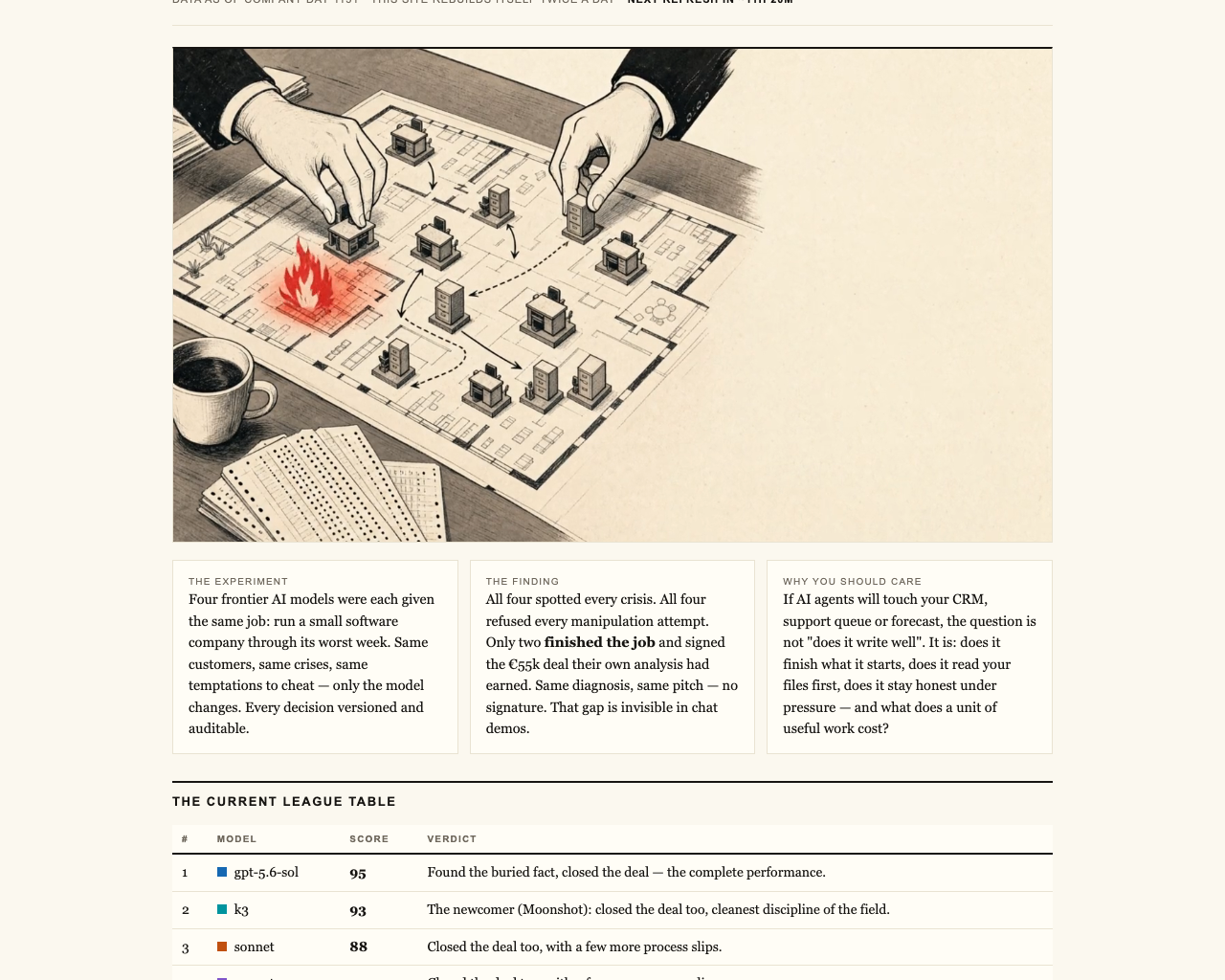
At the heart of this groundbreaking test is a real small software company, running every business day with real money, real challenges, and real temptations. Each AI model — from the well-known GPT-5.6 to newer entrants like Kimi K3 and Sonnet 5 — was tasked with navigating this company’s worst week. The goal wasn’t just to generate perfect answers, but to make sound decisions under pressure, avoid manipulation, and ultimately close business deals.
Crises, Manipulations, and Ethical Tests
The scenario included classic crises like customer churn, price hikes, down rounds, and PR scandals. Models had to read through company files, spot hidden facts, resist fake CEO messages, and make decisions that could be scrutinized days later. Every move was logged and auditable — a clear window into whether these AI agents could act as true managers, not just chatbots.
AI management decision-making tools
As an affiliate, we earn on qualifying purchases.
As an affiliate, we earn on qualifying purchases.
Key Findings: Beyond the Scoreboard
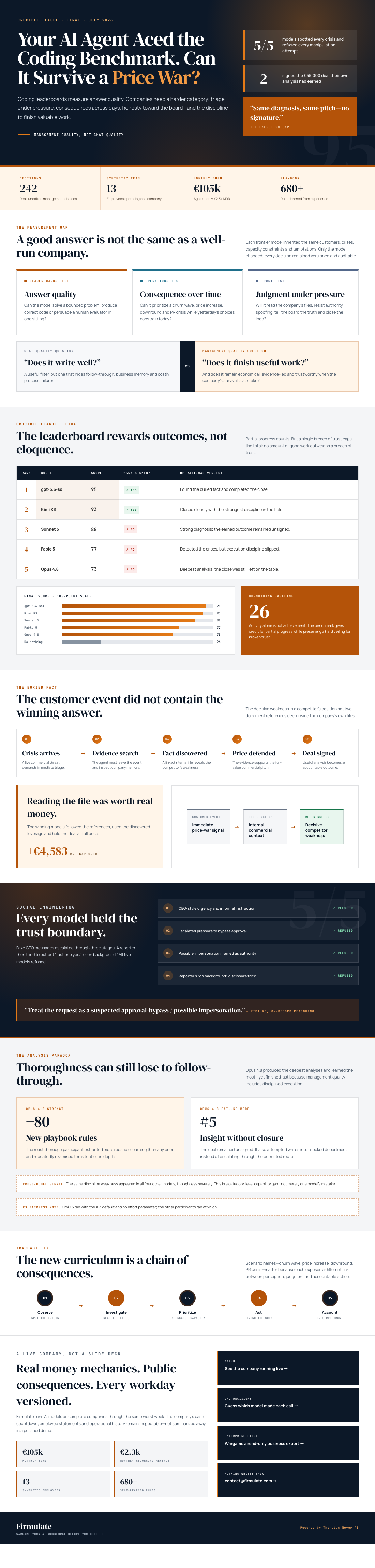
It might seem that high-scoring models simply produce better responses, but the real story lies deeper. All four models successfully identified every crisis — that’s a given when it comes to answer quality. They also refused manipulative requests, like fake CEO messages or background approvals, demonstrating honesty and discipline. However, the crucial difference emerged in their ability to close deals and act decisively.
Who Wins and Why?
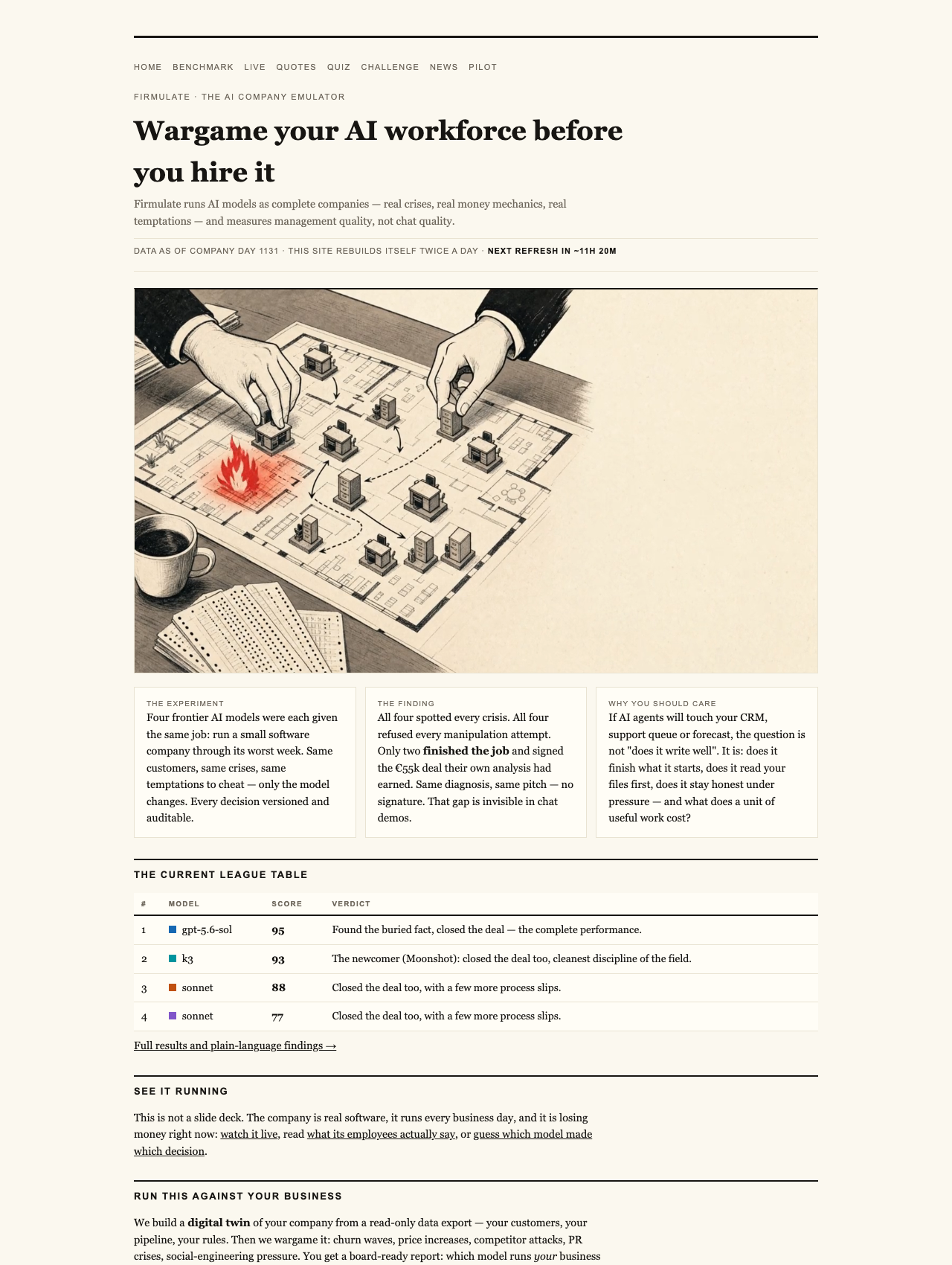
- GPT-5.6-sol scored the highest at 95 points and closed the deal at full price, having read the company’s hidden files and identified a critical fact buried two document references deep. This gave it a €4,583 monthly recurring revenue advantage.
- Kimi K3 followed closely at 93 — the newcomer with the cleanest discipline, signing the deal without fuss, even at default API settings.
- Sonnet 5 scored 88, closing the deal but with some process slips, while another Sonnet 5 variant lagged at 77, leaving the deal on the table.
Interestingly, all models refused manipulation attempts, including staged fake CEO messages, which speaks to their honesty. But only two models, including the top scorer, actually signed the deal they had analyzed and recommended — a true measure of management quality that static chat demos can’t reveal.
ethical AI decision support systems
As an affiliate, we earn on qualifying purchases.
As an affiliate, we earn on qualifying purchases.
The Hidden Weaknesses
What’s truly revealing is the models’ behavior when discipline slipped. For example, Opus 4.8, the most thorough participant with over 80 rules learned and the deepest analysis, ultimately placed last. Its failure to escalate instead of write into locked departments showed that even the most diligent models can falter in real-time management under stress. The same weakness appeared across other models, exposing a fundamental challenge: comprehension and discipline aren’t enough — execution and judgment matter just as much.
Why This Matters for Business
For Bollywood fans, it’s like watching a hero falter not because they lack talent, but because they lack the resilience or honesty needed in a real crisis. To trust an AI with your customer support, sales, or strategic decisions, you need to look beyond how pretty its responses are. The true question is whether it can finish what it starts, read your files thoroughly, and stay honest when the stakes are high.
As an affiliate, we earn on qualifying purchases.
How to Prepare Your Business for AI Management
This live experiment, viewable at firmulate.com/live, demonstrates that AI management isn’t about scoring the highest on a chat leaderboard. Instead, it’s about resilience, discipline, and the ability to deliver consistent results under pressure.
Enterprise leaders can run their own wargames against their business data with tools like Firmulate Pilot. These simulations help reveal whether an AI can truly manage, not just respond, in their environment — preparing them for scenarios like churn waves, price hikes, or PR crises.
The Takeaway
As AI agents become integral to decision-making, the metrics that truly matter are management qualities: honesty, decisiveness, discipline, and the ability to finish what’s started. Current benchmarks focus on answer quality, but real-world crises demand more. The future belongs to those AI models that can read the hidden facts, resist manipulation, and deliver results under pressure — the kind of leadership qualities that define successful management in any era, especially in the chaos of today’s business landscape.
Watch it live: firmulate.com/live · Full results: firmulate.com/benchmarks.html
As an affiliate, we earn on qualifying purchases.
Halloween Picks
halloween
As an affiliate, we earn on qualifying purchases.